



Introduction
Class 10 board exams are one of the most important milestones in a student’s academic journey. Every year, thousands of students aim to score above 90%, but only a few manage to prepare consistently and smartly throughout the session. The good news is that toppers are not born differently – they simply follow better study strategies, maintain discipline, and focus on concept clarity instead of last-minute cramming.
The 2026-27 academic session is expected to become even more competitive, and students need a smart preparation plan from the beginning of the year. Toppers understand that scoring high marks is not only about studying for long hours. It is about studying in the right direction, managing time effectively, practicing regularly, and revising concepts multiple times.
In this blog, we will explore how toppers prepare for the Class 10 board exams in 2026–27, subject-wise preparation strategies, important study tips, common mistakes toppers avoid, and answers to frequently asked questions.
Class 10 Board Exams Subject-Wise Preparation Strategy
Every subject requires a different preparation method for the Class 10th Board Exam. Toppers understand this very well and plan their studies accordingly.
1. Mathematics Preparation Strategy
Mathematics is a scoring subject if concepts and formulas are clear. Toppers focus more on understanding methods rather than memorizing solutions.
How toppers prepare for Maths:
- Practice questions daily without skipping
- Solve NCERT examples and exercises multiple times
- Maintain a separate formula notebook
- Focus on important chapters like:
1. Real Numbers
2. Polynomials
3. Quadratic Equations
4. Trigonometry
5. Statistics - Solve previous year board questions regularly
- Attempt timed mock tests for speed and accuracy
Most toppers dedicate at least 1-2 hours daily to Mathematics practice because consistency matters more than studying once a week.
2. Science Preparation Strategy
Science requires concept clarity, diagrams, numerical practice, and revision. Toppers divide Science into Physics, Chemistry, and Biology preparation.
Physics Strategy:
- Understand formulas and derivations properly
- Practice numerical questions regularly
- Focus on diagrams and definitions
Chemistry Strategy
- Learn chemical reactions with proper understanding
- Practice equations and balancing reactions
- Revise periodic classification and carbon compounds regularly
Biology Strategy :
- Make short notes for diagrams and processes
- Learn keywords and scientific terms carefully
- Practice labeling diagrams
Common topper strategy for Science:
- Use visual learning methods like animated videos
- Revise NCERT line by line
- Solve MCQs and assertion-reason questions
- Practice case-study-based questions
Toppers avoid rote learning in Science and focus more on understanding practical applications.
3. Social Science Preparation Strategy
Many students find social science difficult because of its lengthy syllabus. However, toppers make this subject easy by studying smartly.
How toppers prepare for SST :
- Create short notes and mind maps
- Learn dates and events using tricks
- Revise maps regularly
- Practice answer writing daily
- Focus on keywords in answers
Important preparation tips:
- Read NCERT textbooks thoroughly
- Divide History, Geography, Civics, and Economics separately
- Practice writing answers in points
- Use flowcharts for quick revision
Toppers understand that presentation matters a lot in social science. Clean handwriting and proper answer structure help in scoring better marks.
4. English Preparation Strategy
English is often ignored by students, but toppers know it can improve overall percentage significantly.
How toppers prepare for English:
- Read chapters carefully and understand themes
- Practice grammar daily
- Improve writing skills through regular practice
- Learn formats for letters, articles, and reports
- Solve unseen passages regularly
Vocabulary improvement tips:
- Read newspapers or short articles daily
- Note down new words
- Practice sentence formation
- Toppers focus on writing precise, grammatically correct answers rather than writing unnecessary, lengthy paragraphs.
5. Hindi Preparation Strategy
Hindi preparation mainly depends on writing practice and proper understanding of chapters.
Topper strategies for Hindi:
- Practice grammar topics regularly
- Learn poem explanations carefully
- Improve writing speed
- Focus on spelling accuracy
- Practice writing answers in proper format
- Many toppers revise Hindi literature chapters multiple times to remember important explanations and meanings.
Important Tips for Class 10 Students
1. Follow a Study Timetable
Toppers always follow a proper study schedule. A balanced timetable helps students manage all subjects effectively.
A good timetable should include:
- Daily revision
- Practice sessions
- Short breaks
- Mock tests
- Doubt-solving time
Consistency is more important than studying for very long hours.
2. Focus on NCERT Books First
Most board exam questions are directly or indirectly based on NCERT textbooks. Toppers complete NCERT thoroughly before moving to reference books. Toppers do:
- Read every chapter carefully
- Solve all exercises
- Highlight important points
- Revise examples multiple times
3. Practice Mock Tests and Sample Papers
Mock tests help students understand:
- Exam pattern
- Time management
- Weak areas
- Question difficulty level
Toppers regularly solve:
- Previous year papers
- Sample papers
- Chapter-wise tests
- MCQ quizzes
This improves confidence and reduces exam fear.
4. Make Short Notes
Short notes save time during revision. Toppers prepare concise notes containing:
- Formulas
- Definitions
- Important points
- Diagrams
- Dates and events
These notes become extremely useful before exams.
5. Avoid Distractions
One of the biggest reasons students lose focus is unnecessary distractions.
Toppers usually:
- Limit social media usage
- Avoid multitasking
- Keep mobile phones away while studying
- Study in a distraction-free environment
6. Revise Regularly
Revision is the secret behind topper-level preparation. Toppers revise concepts multiple times throughout the year.
A simple revision cycle includes:
- Daily revision
- Weekly revision
- Monthly revision
- Regular revision helps in long-term memory retention.
7. Stay Healthy and Positive
Good health directly affects concentration and productivity.
Toppers:
- Sleep properly
- Eat healthy food
- Take small breaks
- Exercise lightly
- Stay mentally positive
- Stress management is equally important during board preparation.
What Toppers Don’t Do
Understanding what toppers avoid is just as important as knowing what they do.
1. They Don’t Depend on Last-Minute Study
Toppers avoid studying everything just before exams. They prepare consistently from the beginning of the academic session.
2. They Don’t Memorize Without Understanding
Rote learning may help temporarily, but toppers focus on deepening their understanding of concepts.
This helps them:
- Solve application-based questions
- Write better answers
- Remember concepts longer
3. They Don’t Ignore Weak Subjects
Instead of avoiding difficult subjects, toppers spend more time improving them.
They:
- Ask doubts regularly
- Practice weak topics daily
- Seek help when needed
4. They Don’t Skip Revision
Many average students keep learning new topics but forget old ones. Toppers balance learning and revision together.
5. They Don’t Compare Themselves Constantly
Toppers focus on self-improvement rather than comparing marks with others.
Healthy competition is good, but excessive comparison reduces confidence.
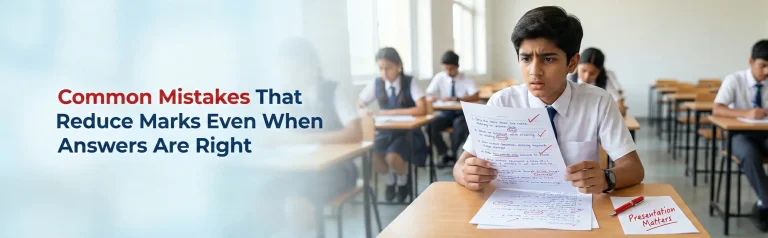
6. They Don’t Ignore Writing Practice
Board exams are written exams, and presentation matters.
Toppers regularly practice:
- Answer writing
- Handwriting improvement
- Time management
- Structured answers
Conclusion
Scoring high marks in the Class 10 board exams in 2026–27 is completely possible with the right strategy, consistency, and dedication. Toppers are not necessarily the students who study all day. They are students who study smartly, revise regularly, practice consistently, and avoid common mistakes.
The key to success lies in:
- Strong concept clarity
- Regular practice
- Time management
- Revision
- Self-discipline
Remember, board exam preparation is a marathon, not a sprint. Small daily improvements can lead to excellent results in the final exams. Start your preparation early, stay consistent, and believe in yourself. With the right approach, you can also become a Class 10 topper.
FAQs
1. How many hours do toppers study in Class 10?
Most toppers study around 5–7 productive hours daily along with school time. The focus is more on consistency and smart study methods rather than long hours.
2. Are NCERT books enough for Class 10 board exams?
Yes, NCERT books are the most important resource for board exam preparation. Most exam questions are based on NCERT concepts and exercises.
3. How often should Class 10 students revise?
Students should follow daily, weekly, and monthly revision schedules to retain concepts effectively.
4. How can I improve my mathematics score in Class 10?
Practice daily, revise formulas regularly, solve previous year questions, and focus on understanding concepts instead of memorization.
5. Is solving sample papers important for board exams?
Yes, sample papers improve time management, confidence, and understanding of the board exam pattern.
6. What is the biggest mistake students make during board preparation?
The biggest mistake is depending on last-minute study and ignoring regular revision throughout the academic session.