
For Class 9th and 10th students, download the ToppersSky App now.


Class 10 English First Flight Poem 4 MCQ - How to Tell Wild Animals
Practice Class 10 English First Flight Poem 4 MCQ with answers on How to Tell Wild Animals. Improve poetry comprehension, literary analysis, and CBSE board exam preparation.
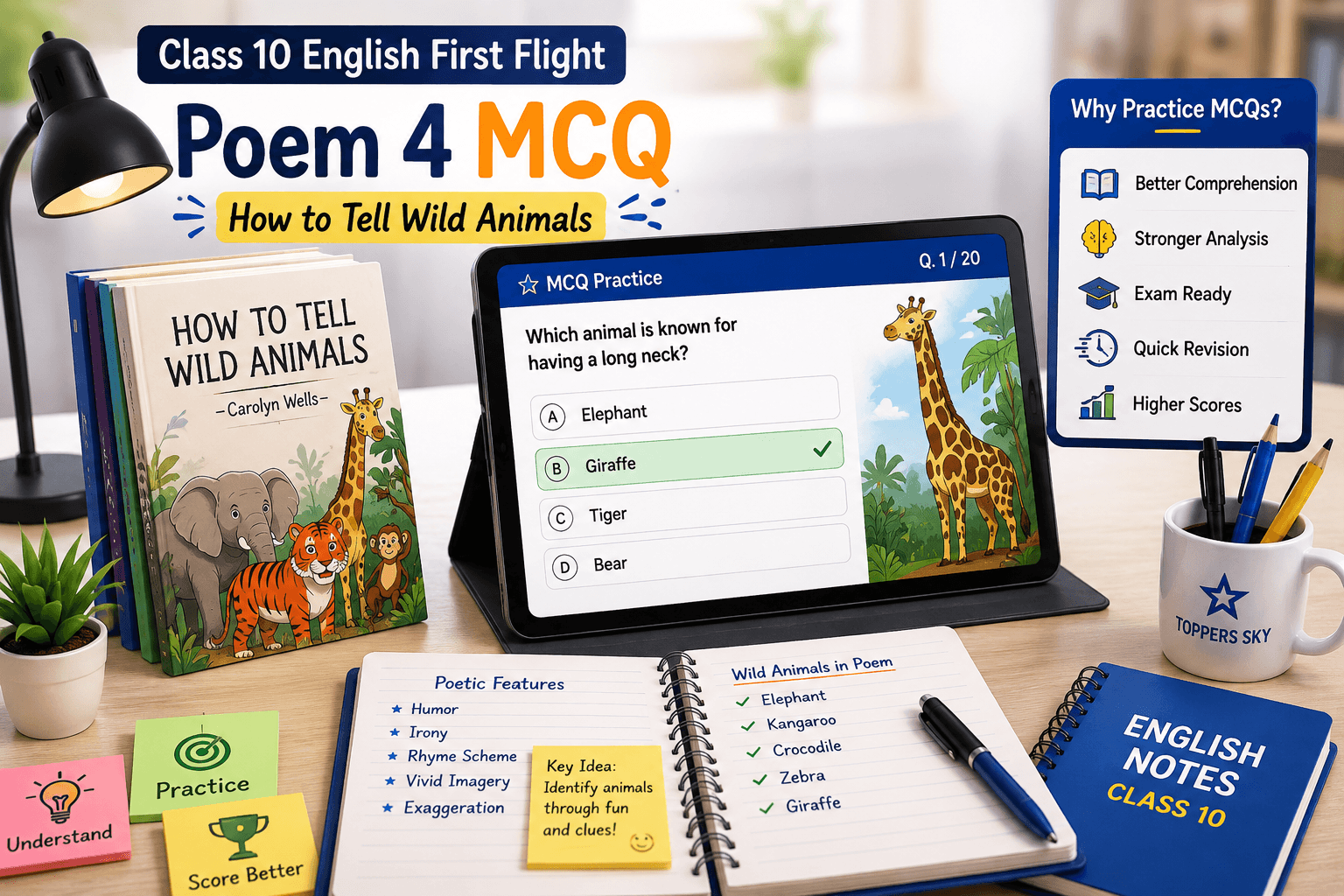
Class 10 English First Flight Poem 4 MCQ kind of helps students practice those important multiple-choice questions from How to Tell Wild Animals by Carolyn Wells. Regular MCQ practice strengthens poetry understanding and builds analytical thinking as well. It also keeps students ready for objective questions that come in CBSE and State Board examinations, and makes quick revision easier before school tests and board exams.
How to Tell Wild Animals is a humorous poem that playfully describes different wild animals and how we may identify them in the jungle. With wit, exaggeration, and irony, the poet sets a light-hearted mood while introducing poetic tools like rhyme, imagery, and humor. It is enjoyable to read and often appears in CBSE competency-based questions.
Many students feel their understanding improves once they study Class 10 English Notes before trying MCQs, because detailed explanations make it easier to grasp poetic devices, humor in the lines, themes, and key literary ideas.
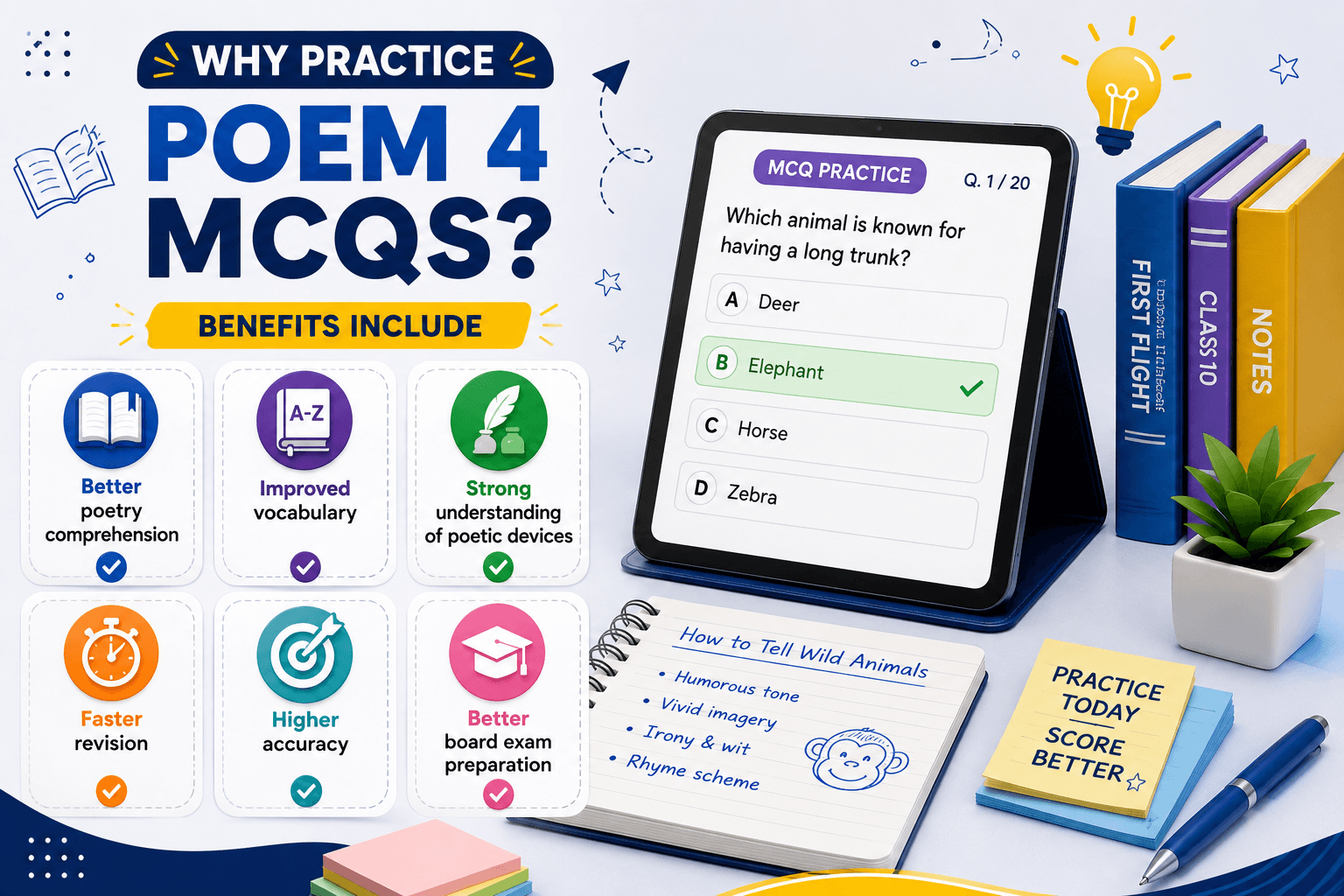
Why Practice Poem 4 MCQs?
Practicing poem-wise MCQs helps students improve literary understanding and perform better in board examinations.
Benefits Include:
Regular MCQ practice prepares students for competency-based, assertion-reason, and objective questions.
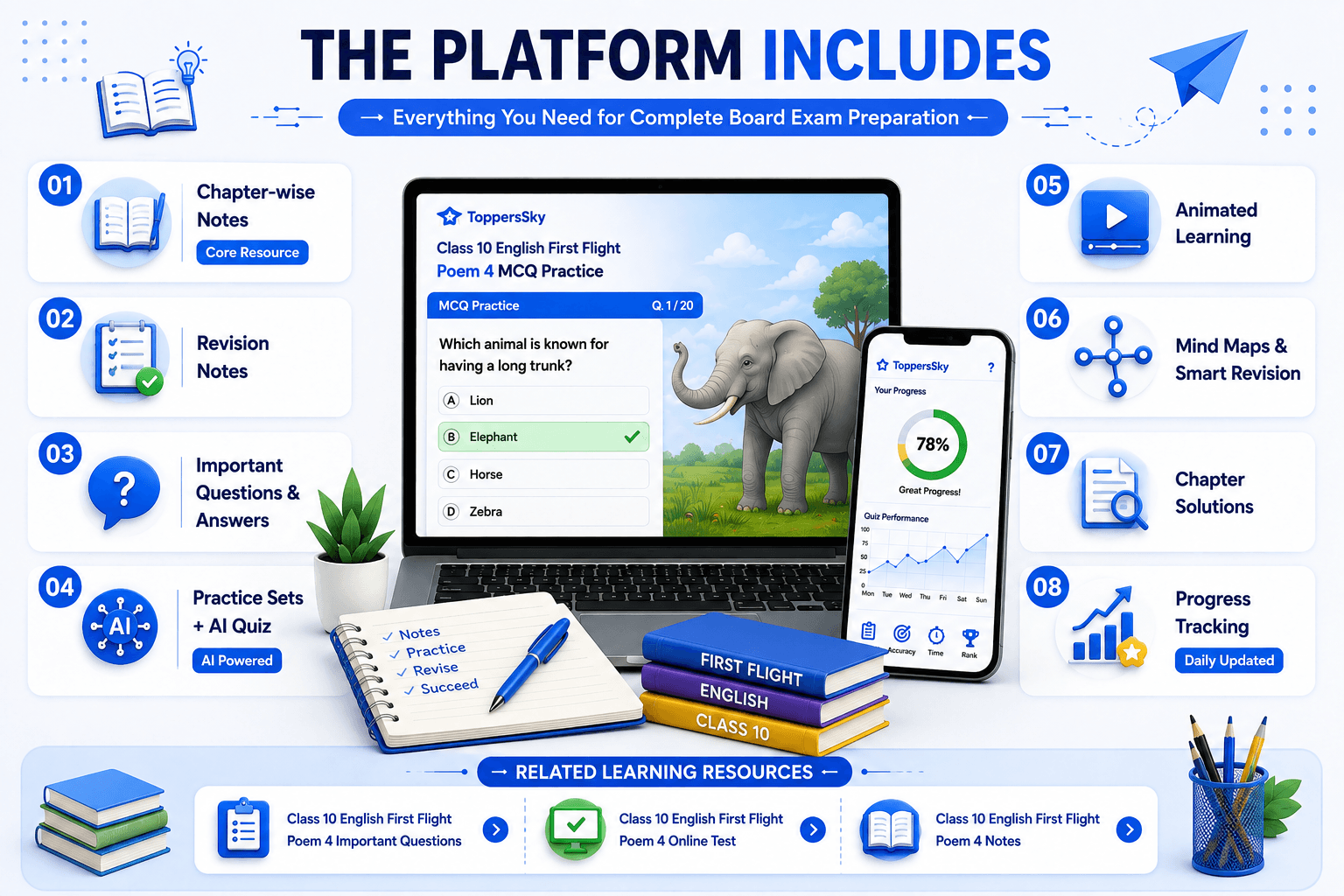
The Platform Includes
Class 10 English First Flight Poem 4 MCQ structured resources for complete board exam preparation.
Everything you need for complete board exam preparation
Structured MCQ practice and learning resources designed for effective Class 10 English poetry revision
Chapter-wise Notes
Revision Notes
Important Questions & Answers
Practice Sets + AI Quiz
Animated Learning
Mind Maps & Smart Revision
Chapter Solutions
Progress Tracking
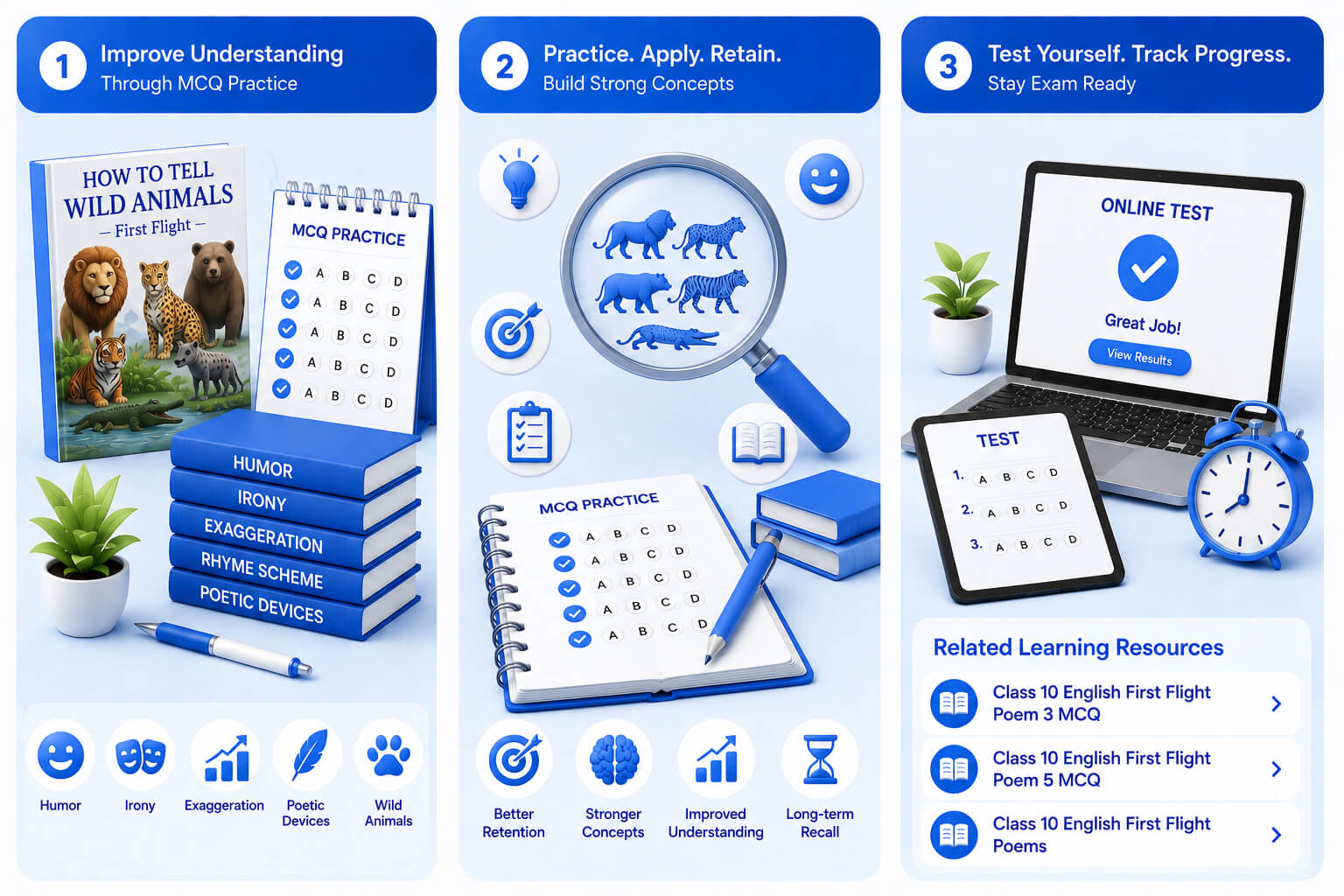
Improve Understanding Through MCQ Practice
How to tell wild animals MCQ questions help students understand important ideas like humor, irony, exaggeration, rhyme scheme, and other poetic devices, along with the traits of different wild animals described in the poem. Regular MCQ practice supports understanding and prepares learners for competency-based and board-level objective questions.
Instead of only memorizing textbook answers, students start analyzing funny and unusual descriptions of the lion, leopard, bear, tiger, hyena, and crocodile, while understanding the poet's creative style. This method builds analytical thinking and improves long-term recall.
Many students solve Class 10 Question Bank questions after MCQs because chapter-wise practice supports conceptual understanding and confidence for school and board examinations.
Prepare Better for Exams With Poem-Wise MCQs
First Flight Poem 4 MCQ with answers practice helps students improve poetry comprehension, literary analysis, vocabulary growth, and understanding of poetic devices. Repeated practice builds confidence and keeps students ready for competency-based and board-level exams.
Students who solve poem-wise quizzes regularly, revise notes properly, and understand literary devices usually do better because they can interpret humorous language, identify poetic techniques quickly, and answer application-based questions.
A lot of students boost board preparation by solving Class 10 Previous Year Questions after finishing MCQs, because earlier papers help identify high-priority patterns, improve speed, and make the latest exam pattern feel familiar.
Students Preparing For
ToppersSky Track Record
Thousands of students trust ToppersSky for chapter-wise MCQ practice, concept-based learning, and complete board exam preparation.
Download ToppersSky App
Prepare smarter with chapter-wise notes, AI-powered quizzes, revision tools, animated learning videos, mind maps, important questions, previous year papers, doubt-solving support, and complete board exam preparation - all in one app.
Frequently Asked Questions
How to Tell Wild Animals was written by Carolyn Wells, an American writer and poet known for her humorous style and light-hearted literary works.
The poem uses humor and exaggeration to describe different wild animals while entertaining readers and demonstrating poetic devices such as irony, imagery, and rhyme.
The poem uses humor, irony, exaggeration (hyperbole), rhyme, repetition, and vivid imagery to create a playful and entertaining reading experience.
Regular MCQ practice strengthens understanding of poetic devices, improves reading comprehension, and prepares students for competency-based, objective, and board examination questions.
Read the poem carefully, understand humorous descriptions of each animal, revise poetic devices and themes, and regularly practice poem-wise MCQs, notes, question bank exercises, and previous year questions for excellent board exam preparation.