
For Class 9th and 10th students, download the ToppersSky App now.


Class 10 SST Political Science Chapter 1 MCQ - Power Sharing
Practice Class 10 SST Political Science Chapter 1 MCQ with answers on Power Sharing. Improve concepts with chapter-wise quizzes, notes, and board exam preparation.
Class 10 SST Political Science Chapter 1 MCQ kind of helps students get used to important multiple-choice questions from Power Sharing. Regular MCQ practice really boosts conceptual clarity, improves analytical thinking a bit, and also helps students get ready for the objective questions that usually come in CBSE and State Board exams. Plus it gives a quick revision window right before school tests or even board exams.
Power Sharing is also one of the most important chapters in Political Science. It basically covers why sharing power is essential in a democracy, the different kinds of power sharing, the Belgium and Sri Lanka case studies, and how national unity can be protected through democratic participation. When students understand these ideas properly they are able to attempt both objective and competency based questions with more confidence.
Many students go for Class 10 Chapter Wise Questions while solving MCQs because practicing by chapter wise topics helps sharpen concepts and lifts overall exam performance, in a smoother way.
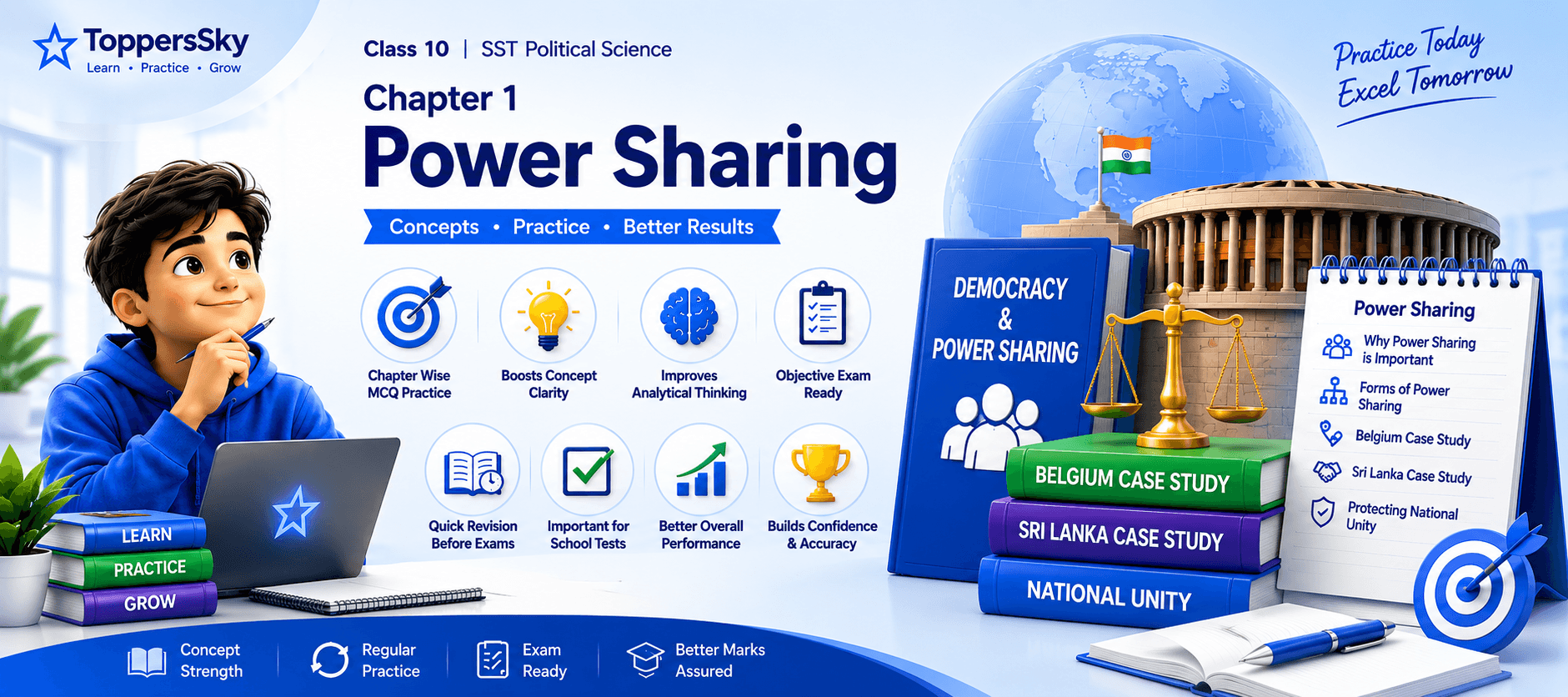
Why Practice Chapter 1 MCQs?
Practicing chapterwise MCQs really help students to firm up their concepts, and also make them more exam ready, in a kind of gradual way, because it trains focus and recall.
Benefits Include:
Students who regularly practice MCQs become familiar with competency-based questions and improve their speed and accuracy in examinations.
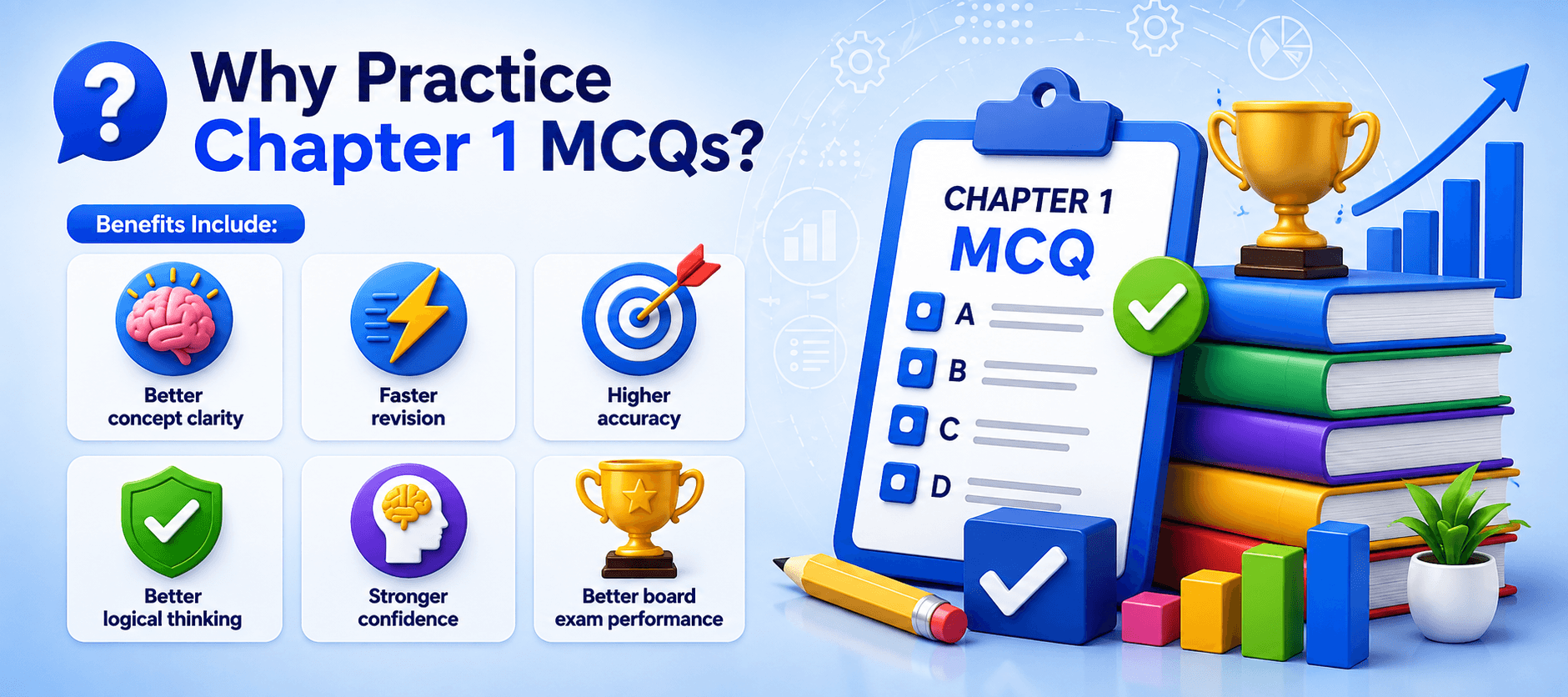
The Platform Includes
Class 10 SST Political Science Chapter 1 MCQ structured resources for complete board exam preparation.
Everything you need for complete board exam preparation
Structured MCQ practice and learning resources designed for effective Class 10 Social Science concept revision
Chapter-wise Notes
Revision Notes
Important Questions & Answers
Practice Sets + AI Quiz
Animated Learning
Mind Maps & Smart Revision
Chapter Solutions
Progress Tracking
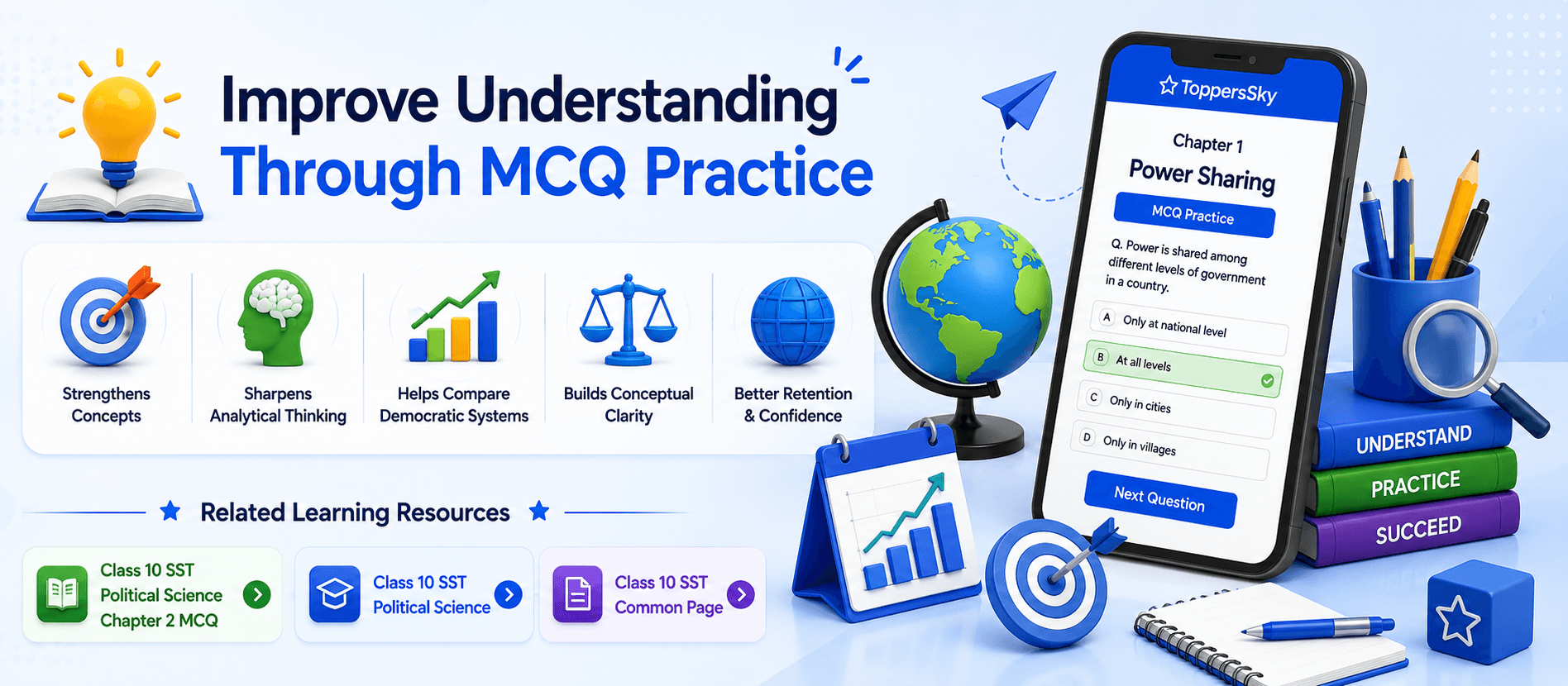
Improve Understanding Through MCQ Practice
Power sharing mcq questions help students get a better grip on key ideas like the horizontal and vertical distribution of power, federal government, community government, political parties and even the Belgium and Sri Lanka case studies. With regular MCQ practice students not only remember but they start to think analytically, which is exactly what board examinations expect.
Rather than just memorizing facts, learners usually end up comparing democratic systems, understanding constitutional arrangements in a more practical way, and applying those ideas to competency based questions. That approach supports long term retention, and it also improves their confidence during exams.
Many students also use a Class 10 Educational App alongside MCQs, because it feels more interactive, gives instant feedback, and the chapter-wise quizzes make Political Science preparation feel more effective, you know in day to day study.
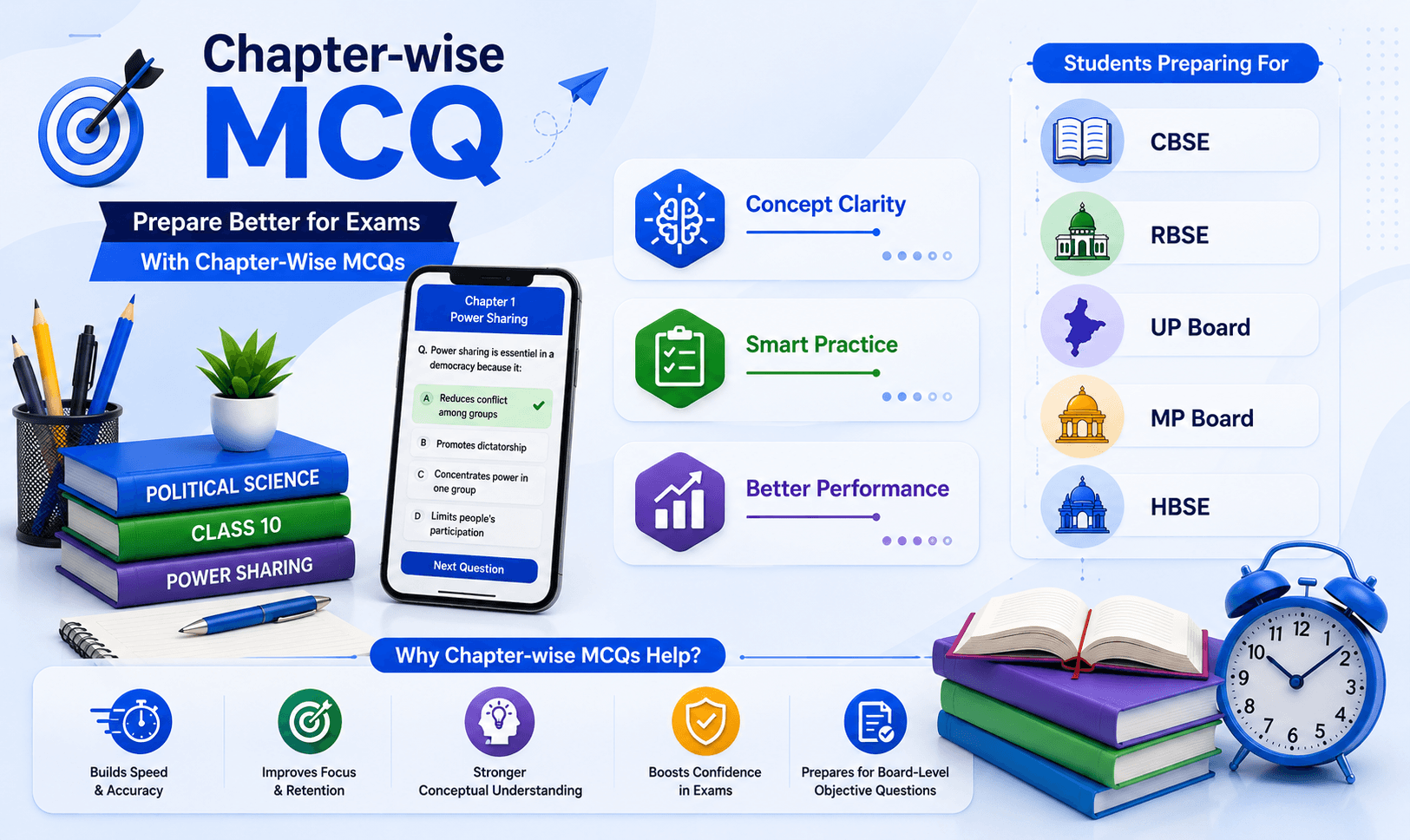
Prepare Better for Exams With Chapter-Wise MCQs
Class 10 political science MCQ chapter 1 practice kind of helps students get used to board-level objective question formats while also pushing their understanding of democratic ideas and power sharing arrangements. When this is done regularly, it usually builds speed accuracy, and a bit more confidence during exams, so the mind stays steady.
Students who use quizzes along with revision notes, and do chapter-wise learning, often do better overall, because they can spot where they are weak, and then revisit those concepts in a smarter way, not just reread everything. It feels more focused, in a sort of practical manner.
Also, using Class 10 Mind Maps along with MCQ practice helps students revise important concepts in a more visual way. They tend to remember case studies more easily, and their full board examination preparation strengthens overall, even when time is short.
Students Preparing For
ToppersSky Track Record
Thousands of students use ToppersSky to strengthen concepts, improve learning outcomes, and prepare effectively for board examinations.
Download ToppersSky App
Start learning smarter with chapter-wise notes, AI-powered quizzes, revision tools, animated learning videos, mind maps, important questions, practice papers, doubt-solving support, and complete board exam preparation resources.
Frequently Asked Questions
In this Belgium case study, it is kind of clear how power sharing between various linguistic communities helped keep unity, peace, and political stability in a democratic country. It is not only theory either, it shows what happens when different groups are given some say.
Meanwhile, the Sri Lanka case study also illustrates that if power is held too much by just one community, then social frictions can grow. It can also weaken national unity and make the country feel less together, overall.
Students should really grasp power sharing not just at one level, but across different levels of government and across different social groups as well as political parties and even pressure groups or movements. In other words, it is about balance in several directions, not one big direction only.
Power sharing tends to lower conflicts, boost political participation, guard the rights and interests of minorities, and in general it strengthens democratic governance.
If you focus on the Belgium and Sri Lanka case studies, then you can also connect this to the forms of power sharing, including horizontal distribution of power and vertical distribution of power, plus community government, and why democracy matters in the first place.