
For Class 9th and 10th students, download the ToppersSky App now.


Class 10 SST Political Science Chapter 5 MCQ - Outcomes of Democracy
Practice Class 10 SST Political Science Chapter 5 MCQ with answers on Outcomes of Democracy. Improve concepts with chapter-wise quizzes, notes, and board exam preparation.
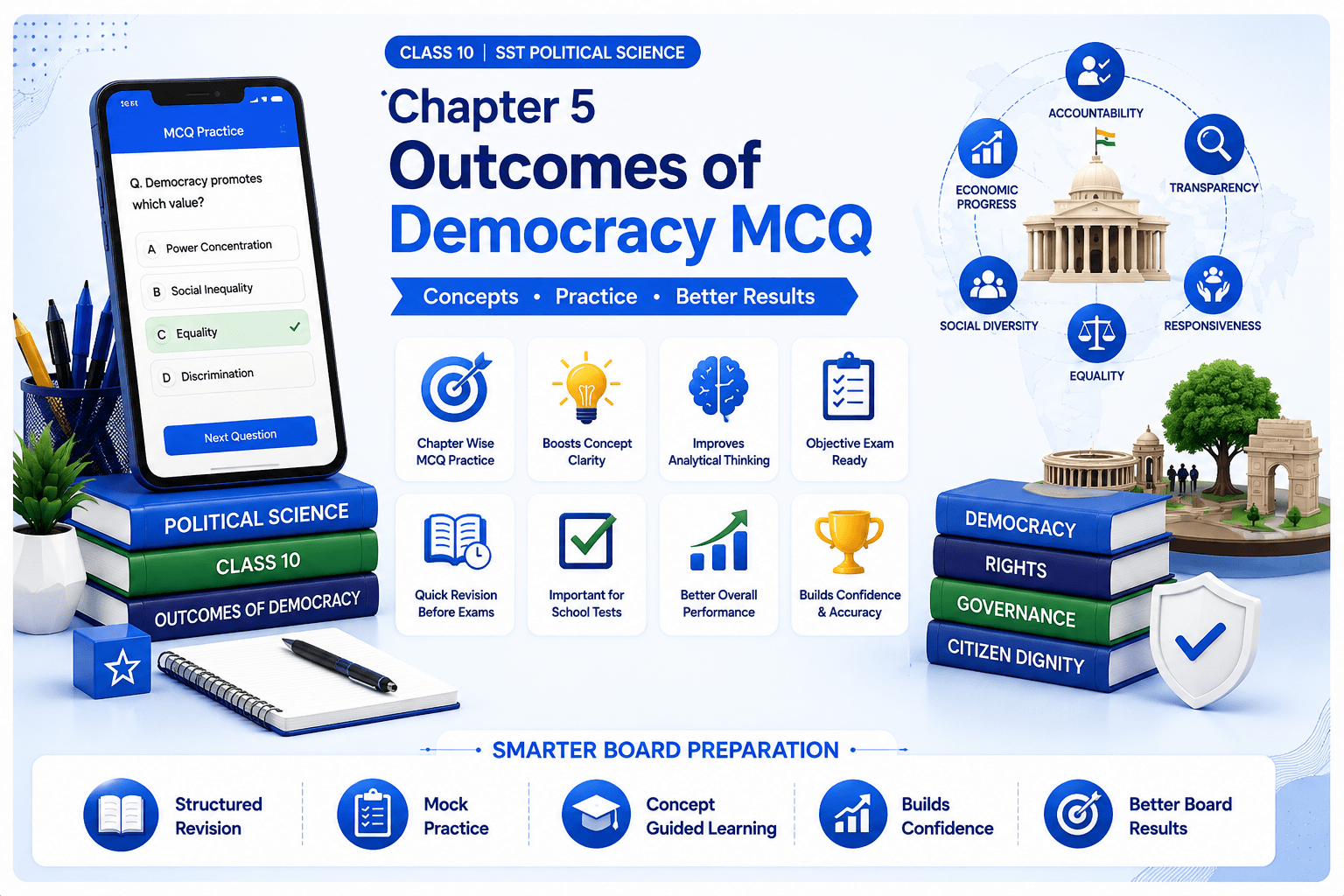
Class 10 SST Political Science Chapter 5 MCQ helps students practice key multiple-choice questions from Outcomes of Democracy. Doing these MCQs regularly gives a better grip on concepts, helps analytical thinking, and also readies students for objective questions that CBSE and State Board often ask. Plus, it makes quick revision feel easier before school tests and during board exams.
This chapter covers how democracy impacts accountability, transparency, responsiveness, economic progress, and accommodation of social diversity. It also discusses equality and the dignity of citizens. Students learn that democratic governments are not only judged by their structure, but by their outcomes. Because of that, these ideas keep appearing in objective and competency-based questions.
Many students improve preparation by combining chapter-wise MCQ practice with Class 10 Board Preparation resources, since structured revision, mock practice, and concept-guided learning build confidence and directly support board exam performance.
Why Practice Chapter 5 MCQs?
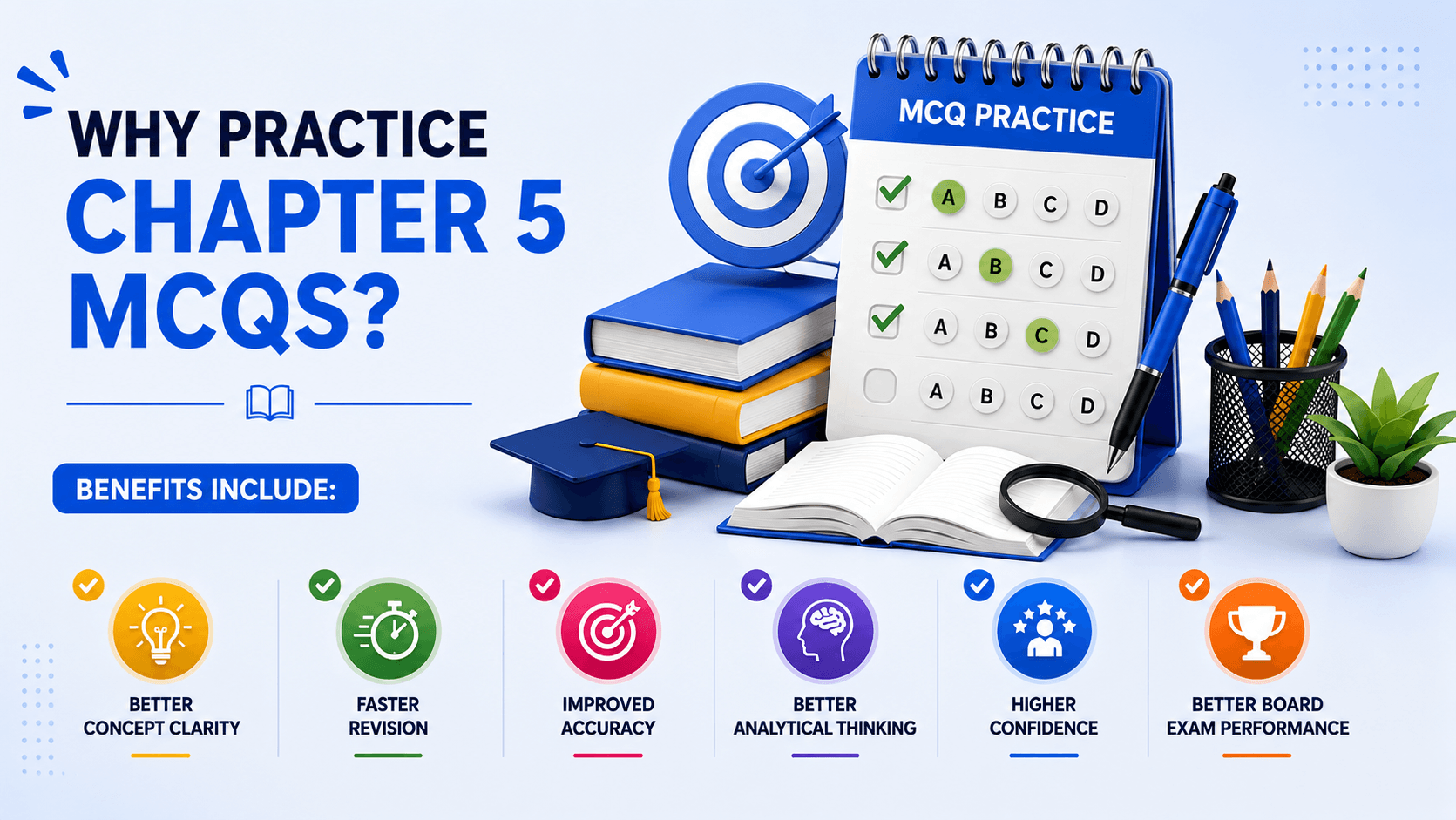
Practicing chapter-wise MCQs is one of the best ways to prepare for school and board examinations.
Benefits Include:
Students who regularly solve MCQs become familiar with competency-based questions and improve speed and accuracy during examinations.
The Platform Includes
Class 10 SST Political Science Chapter 5 MCQ structured resources for complete board exam preparation.
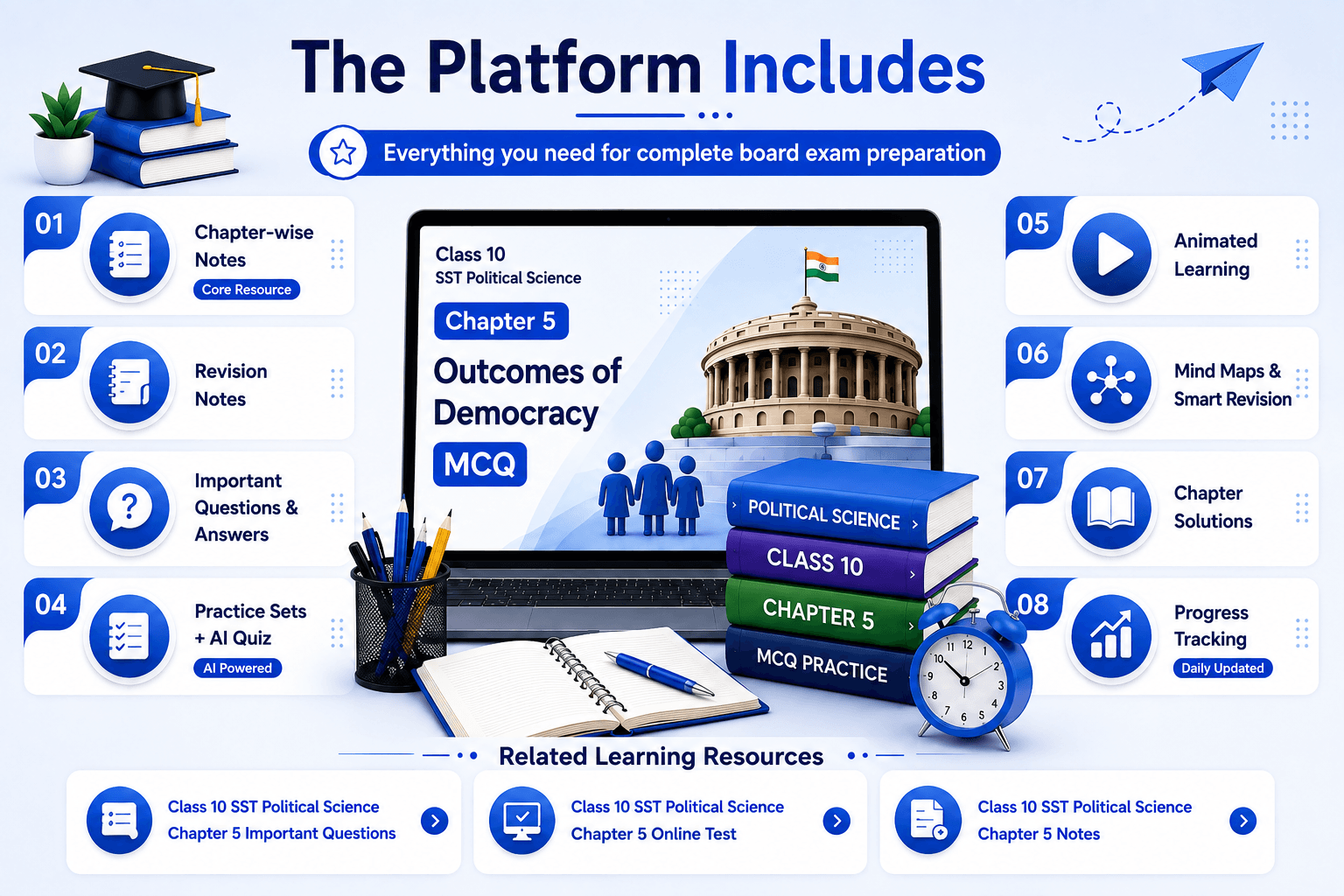
Everything you need for complete board exam preparation
Structured MCQ practice and learning resources designed for effective Class 10 Social Science concept revision
Chapter-wise Notes
Revision Notes
Important Questions & Answers
Practice Sets + AI Quiz
Animated Learning
Mind Maps & Smart Revision
Chapter Solutions
Progress Tracking
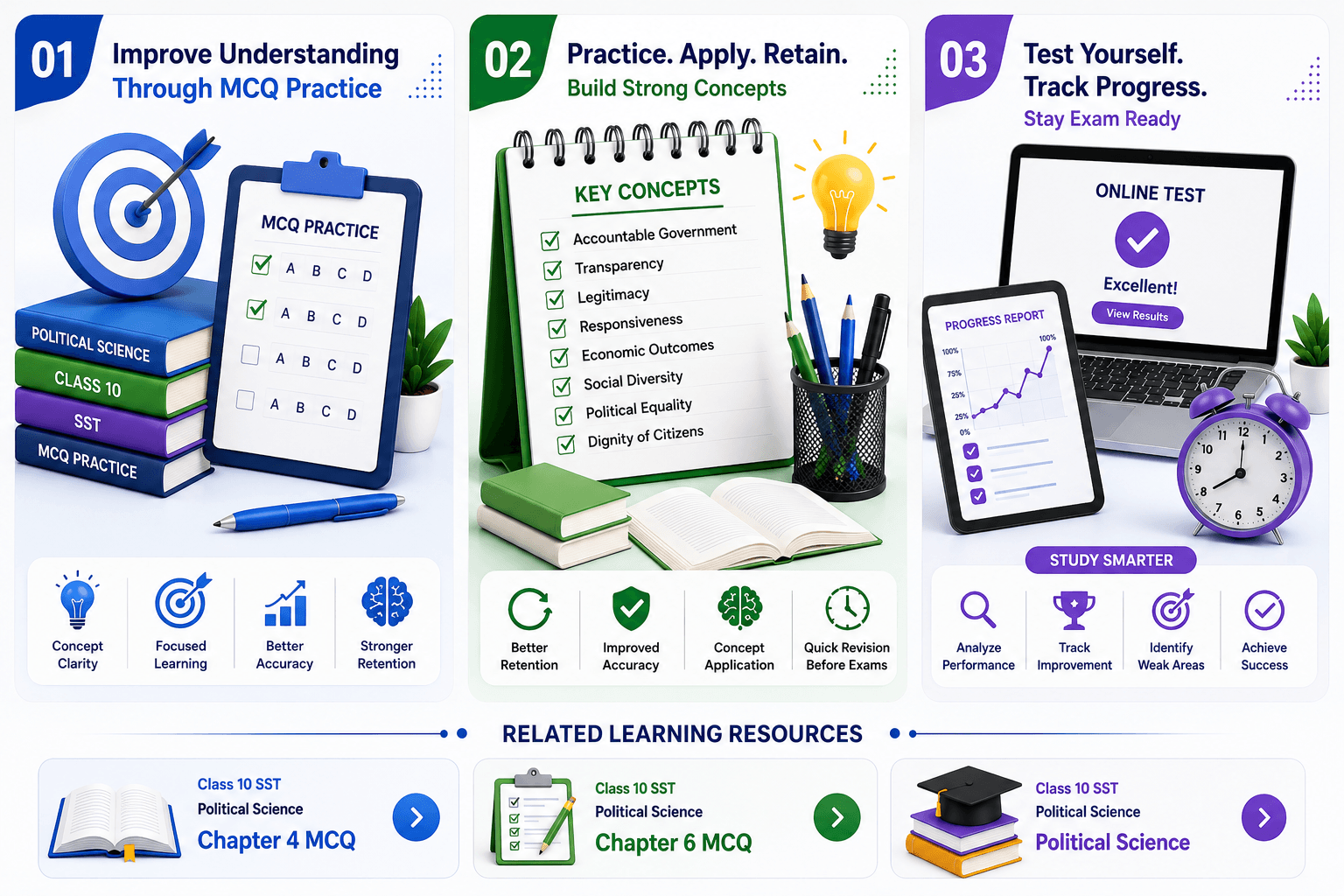
Improve Understanding Through MCQ Practice
Outcomes of democracy MCQ questions help students understand key ideas like accountable government, transparency, legitimacy, responsiveness, economic outcomes, accommodation of social diversity, political equality, and dignity of citizens. Doing objective questions regularly strengthens conceptual understanding and prepares students for competency-based board examinations.
Instead of only memorizing textbook definitions, students start analyzing democratic systems through practical situations and case-based questions. This builds critical thinking and supports long-term retention of important Political Science concepts.
Many students also go back to Class 10 Study Notes Online after MCQs, because short chapter-wise notes reinforce concepts and make last-minute revision easier before examinations.
Prepare Better for Exams With Chapter-Wise MCQs
Class 10 political science MCQ chapter 5 practice helps students measure how effective democratic governments are while getting ready for board-level objective questions. Continuous practice improves concept clarity, speed, and confidence for school and board exams.
Students who regularly solve quizzes and revise notes with important question practice usually identify weak areas early, and then improve those areas through continuous revision. This steady routine strengthens academic performance.
Many learners solve Class 10 Previous Year Questions after chapter-wise MCQs, because these papers show frequently asked topics, improve time management, and make students familiar with the latest board examination format.
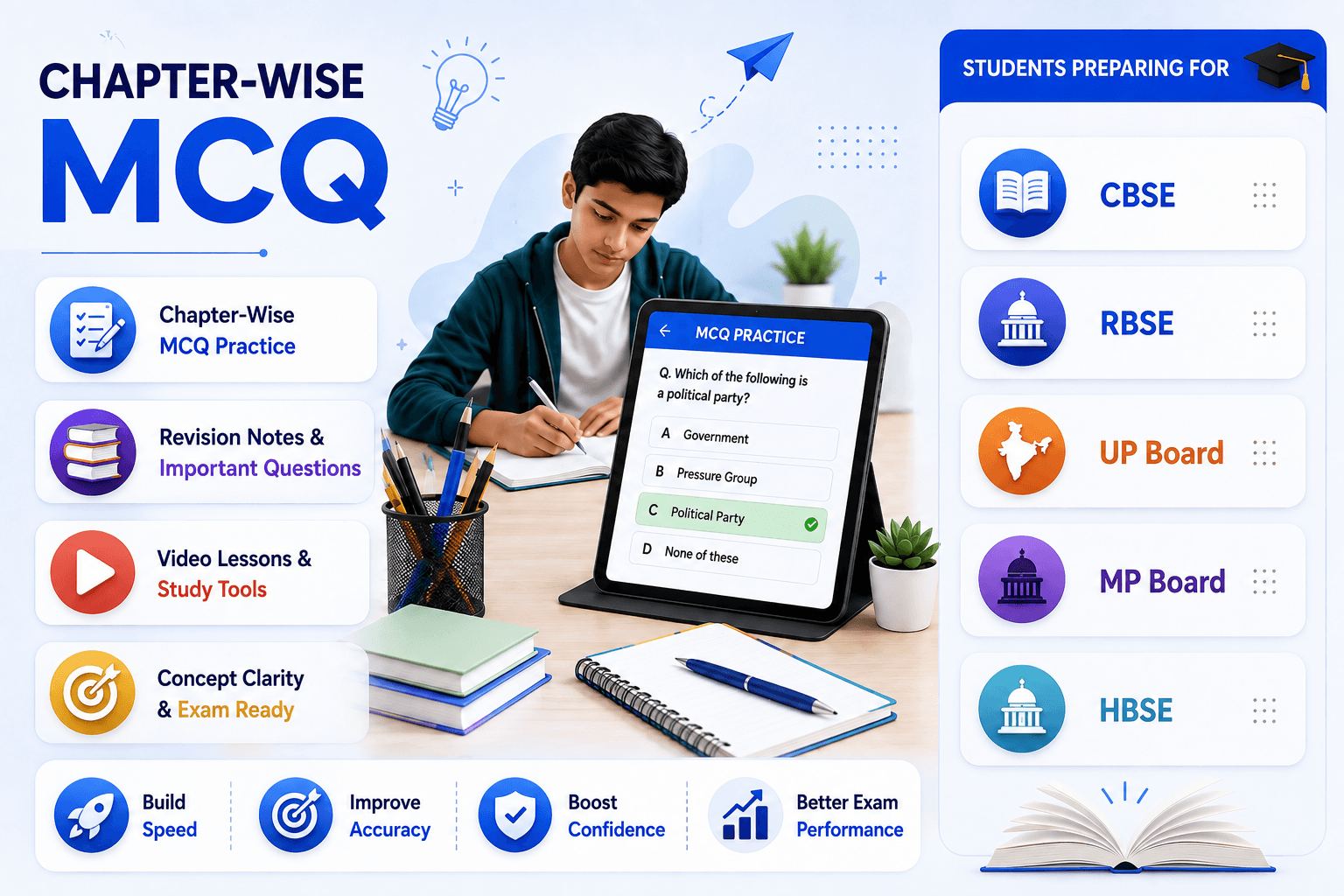
Students Preparing For
ToppersSky Track Record
Thousands of students trust ToppersSky for chapter-wise learning, concept-based preparation, and complete board exam success.
Download ToppersSky App
Prepare smarter with chapter-wise notes, AI-powered quizzes, revision tools, animated learning videos, mind maps, important questions, previous year papers, doubt-solving support, and complete board exam preparation - all in one app.
Frequently Asked Questions
The chapter explains accountability, transparency, responsiveness, economic development, accommodation of social diversity, political equality, and the dignity and freedom of citizens.
Accountability ensures that elected representatives remain answerable to citizens for their decisions and actions, making democratic governance more transparent and responsible.
No. Democracy creates opportunities for inclusive development and public participation, but economic growth also depends on factors such as policies, resources, and governance.
Democracy guarantees equal rights, promotes freedom, respects diversity, and ensures that every citizen is treated with dignity regardless of gender, religion, caste, or background.
Revise important concepts, study chapter-wise notes, practice objective questions regularly, and solve previous year questions to improve conceptual understanding and board exam performance.