
For Class 9th and 10th students, download the ToppersSky App now.


Class 10 English First Flight Poem 3 MCQ - A Tiger in the Zoo
Practice Class 10 English First Flight Poem 3 MCQ with answers on A Tiger in the Zoo. Improve poetry comprehension, literary analysis, and board exam preparation with chapter-wise quizzes.
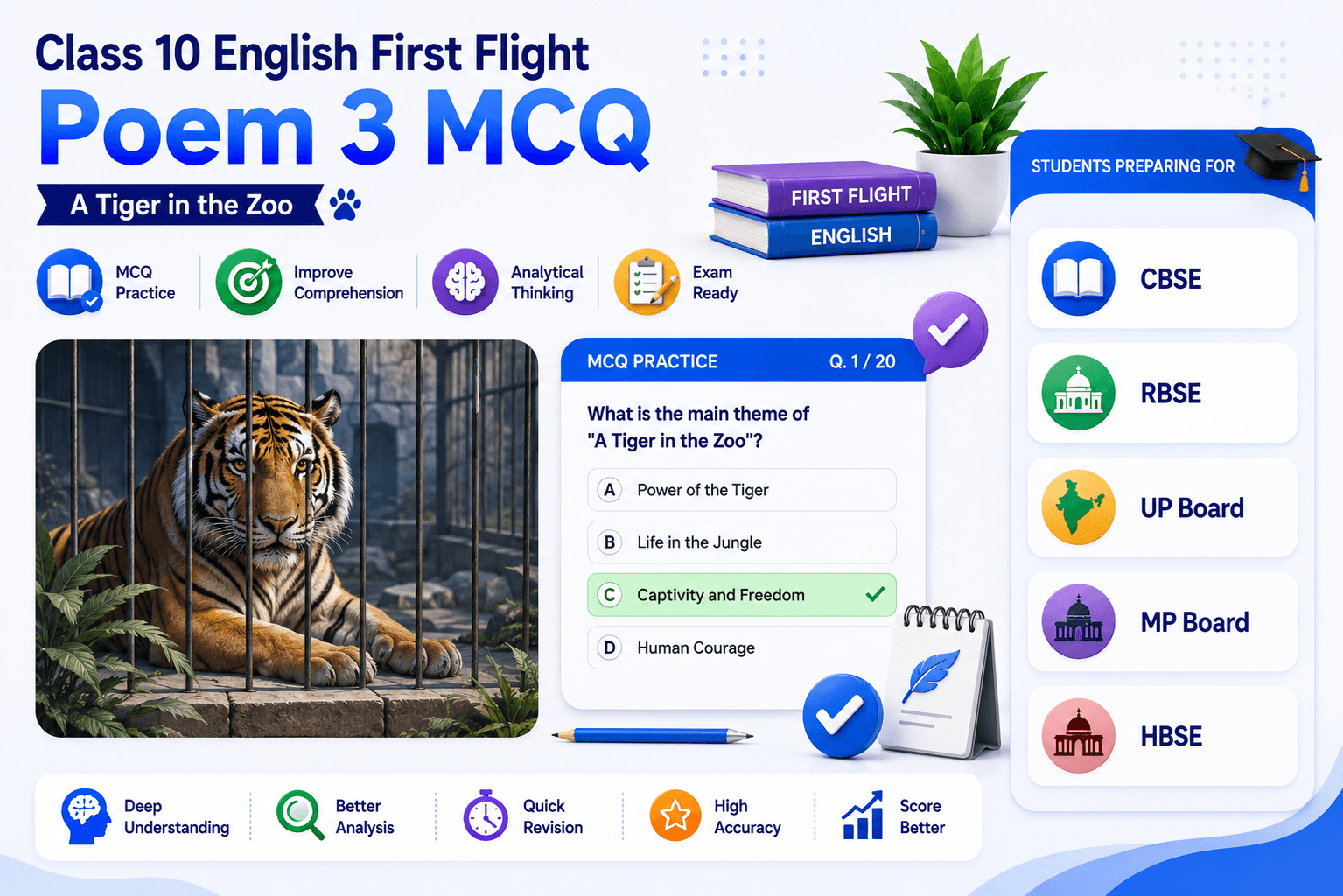
Class 10 English First Flight Poem 3 MCQ helps students practice important multiple-choice questions from A Tiger in the Zoo by Leslie Norris regularly. Frequent MCQ practice improves poetry comprehension and analytical thinking, and also prepares students for objective questions asked in CBSE and State Board exams. It also helps revision before school tests and board exams.
In A Tiger in the Zoo, the poet presents a contrast between the majestic tiger in its natural habitat and its life inside a cage. The poem uses strong imagery and symbolism to show that wildlife protection matters, freedom is essential, and captivity has negative effects on wild animals. Understanding these ideas helps students answer competency-based and literary questions with confidence.
Many students improve their preparation by studying Class 10 English Notes along with MCQs. Detailed explanations make the poem's themes, poetic devices, symbolism, and central message easier to understand together.
Why Practice Poem 3 MCQs?
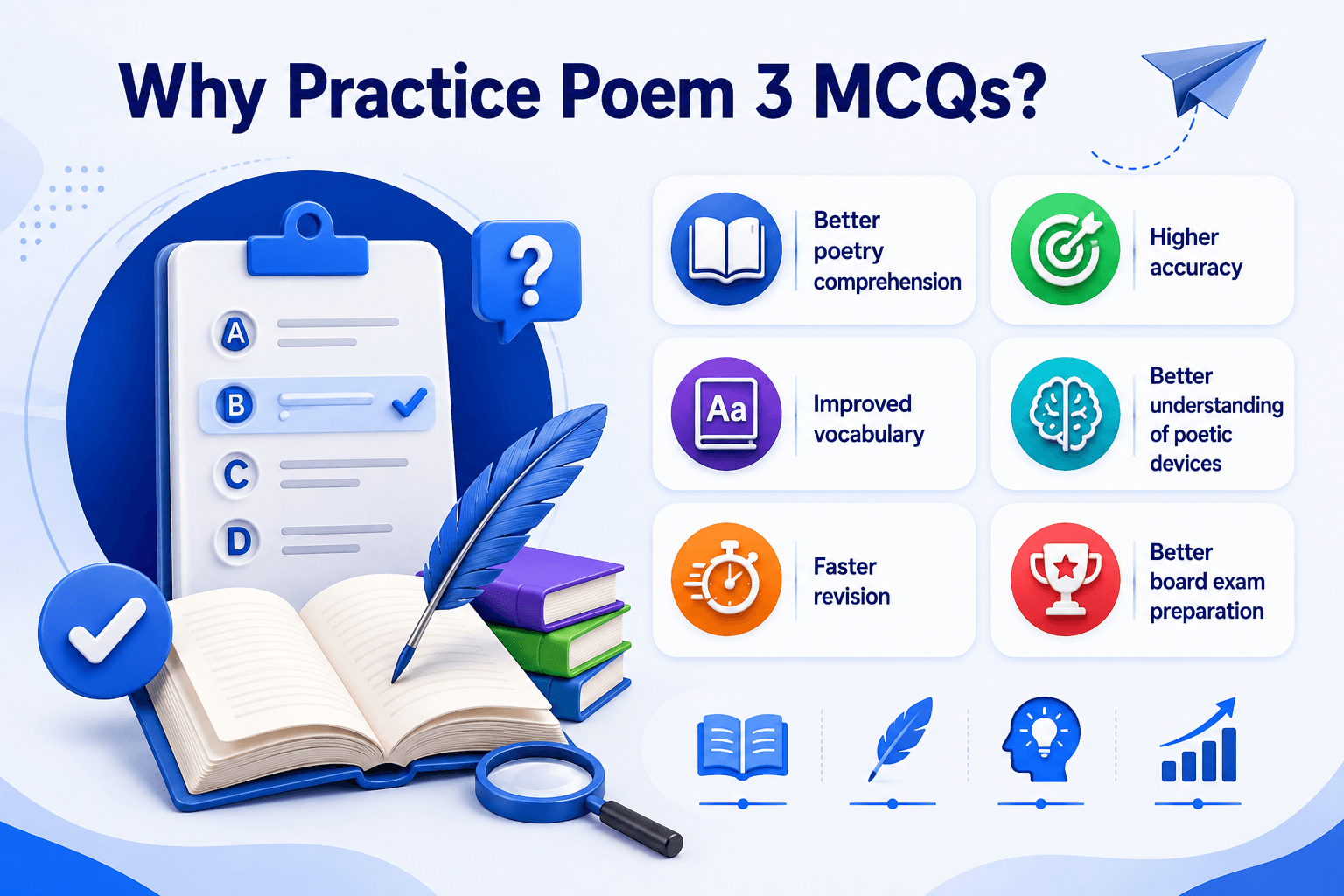
Practicing poem-wise MCQs is one of the most effective ways to strengthen literary concepts and improve board exam performance.
Benefits Include:
Regular MCQ practice prepares students for competency-based and literary appreciation questions.
The Platform Includes
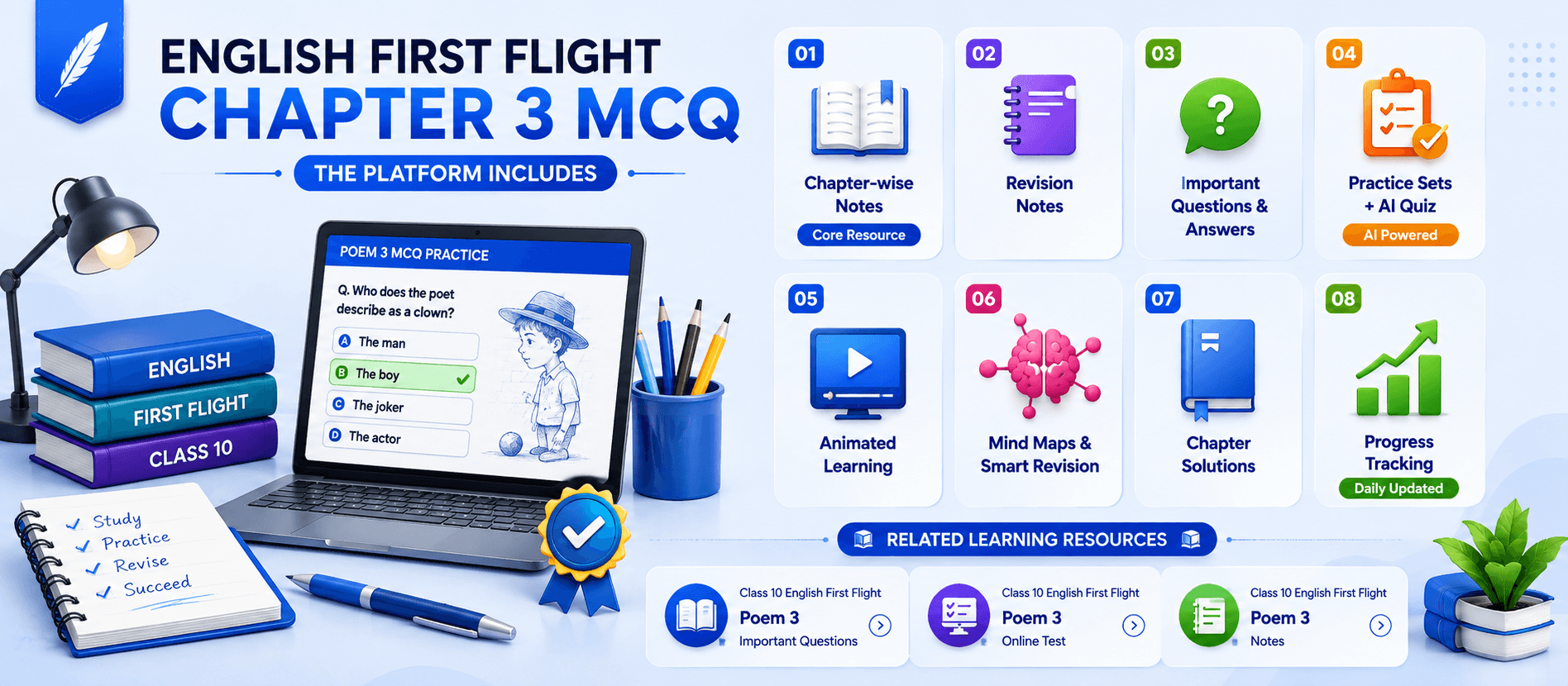
Class 10 English First Flight Poem 3 MCQ structured resources for complete board exam preparation.
Everything you need for complete board exam preparation
Structured MCQ practice and learning resources designed for effective Class 10 English poetry revision
Chapter-wise Notes
Answer Presentation
Important Questions & Answers
Practice Sets + AI Quiz
Animated Learning
Mind Maps & Smart Revision
Chapter Solutions
Progress Tracking
Improve Understanding Through MCQ Practice
A Tiger in the Zoo MCQ questions help students understand symbolism, imagery, contrast, poetic devices, and the central theme of freedom versus captivity. Regular MCQ practice strengthens comprehension and helps with competency-based and board-level objective questions.
Instead of only memorizing textbook answers, students start understanding the tiger's emotions, compare life in the zoo with life in the natural habitat, and grasp the poet's message about wildlife conservation. This style of learning strengthens critical thinking and long-term recall.
Many learners revise Class 10 Course after completing MCQs because these are focused on exam-oriented ideas and support stronger board exam preparation.

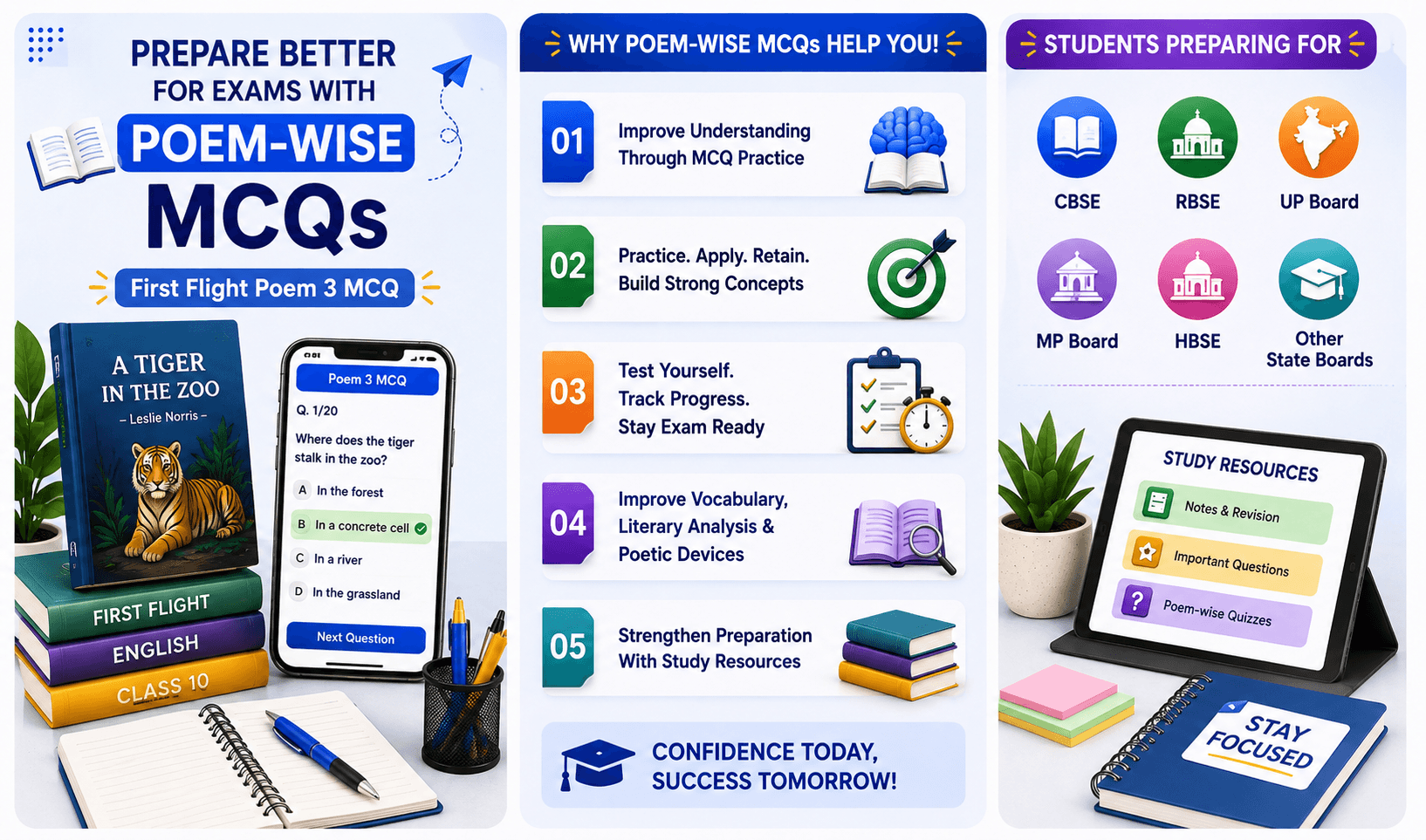
Prepare Better for Exams With Poem-Wise MCQs
First Flight Poem 3 MCQ with answers practice helps students improve poetry understanding, literary analysis, vocabulary, and grasp of poetic devices. With regular practice, confidence increases and readiness improves for competency-based and board-level questions.
Students who solve poem-wise quizzes regularly, revise notes, and understand literary devices tend to perform better because they can analyze both direct meaning and symbolic meaning in a proper way.
Many learners strengthen preparation using Class 10 Study Resources after finishing MCQs, because these resources provide extra practice, quick revision, and concept-focused learning that improves board exam readiness.
ToppersSky Track Record
Thousands of students trust ToppersSky for poem-wise practice, concept-based learning, and complete board exam preparation.
Download ToppersSky App
Prepare smarter with poem-wise notes, AI-powered quizzes, revision tools, animated learning videos, mind maps, important questions, previous year papers, doubt-solving support, and complete board exam preparation - all in one app.
Frequently Asked Questions
A Tiger in the Zoo was written by Leslie Norris, a Welsh poet known for his poems about nature, animals, and human emotions.
The poem highlights the contrast between freedom and captivity, emphasizing that wild animals deserve to live freely in their natural habitats rather than being confined in cages.
The poet uses contrast to compare the tiger's powerful life in the jungle with its helpless existence inside the zoo. Imagery and symbolism are also used extensively to convey the poem's message.
Regular MCQ practice improves poetry comprehension, strengthens understanding of themes and poetic devices, and prepares students for competency-based and board examination questions.
Read the poem carefully, understand themes of freedom and captivity, revise poetic devices and symbolism, and regularly practice poem-wise MCQs, important questions, study resources, and notes for excellent board exam preparation.